Posts

Former Student Work

Image
Former Student Work

Group Member Blog Post

Image
Group Member Blog Post      My group members for the media studies project are Jaden Dinh, Afifa Risha, and Jason Truong. I was originally planning to do it with Jaden and Jason since they were already my friends, and we decided to take the class together, but then Afifa switched after I convinced her to, so I wanted to do it with her. At first, I only wanted to do it with Afifa because if more people were added, then it would become more complicated to manage the work and get all group members to complete the work. After discussing with Afifa, we decided to add Jason and Jaden. They also wanted to work with us, making an agreement that they would be the actors and we would manage the editing and filming. Jaden and Jason are definitely on the more extroverted side, so they would 100% put their full confidence into the acting for sure, and as a past editor, it would be easy to handle the editing, and Afifa is super reliable and intelligent and gets all her work done in a t...

Story Boarding

Image
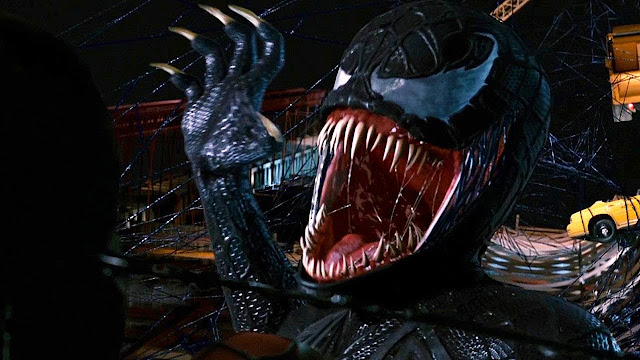
Story Boarding Spider-Man 3 (2007) Directed by Sam Raimi Link to Cool Peter Parker Scene (Spider-Man 3) Movie Clip      I've learned that storyboarding is crucial in constructing a movie and planning the scenes in terms of lighting, camera movement, editing, and storytelling. I realize the difficulty of this craft and the immense amount of time it takes to create a storyboard and a movie. You not only need to draw the scene but label and explain what is happening for it to be easily executed when production happens. It's like a map since it helps you guide throughout the filming process. Movie directors cannot wing their moves but need to strategically plan to create an understandable flow of shots. For example, the Cool Peter Parker scene from Spider-Man 3 (2007), which I chose to storyboard, consisted of a crosscut, which is when it goes back and forth between shots between Peter Parker and Dr. Conors on a phone call. This is hard to achieve without prior planning, wh...

Mis-en-Scene

Image
Mis-en-Scene The Perks of Being a Wallflower (2012) Directed by Stephan Chbosky      The use of mis-en-scene was used to explain Charlie's background and develop his character. The setting is a snowy night in December, and the location is a ground covered in snow. Charlie is encapsulated by white snow as he makes a snow angel, representing his innocence since this activity is typically for children, and the color white is associated with purity. It represents the childhood he lost, the trauma he experienced, and wanting to dissociate from the world of depression and anxiety that has burdened him. He also appears to be lonely, being isolated in a vast amount of snow at night when nobody is around, and it seems to be reckless, symbolizing his lack of awareness and safety for himself. His costume explains his feelings during this time. For example, he wears a completely black outfit, which shows him mourning for his late aunt, who died around this time and molested him. The...

Mood Board

Image
Mood Board Coraline (2009) Directed by Henry Selick      The movie Coraline (2009) is every child's worst nightmare. Theater-watching dogs, a talking cat, and instrument-playing mice make it all seem comical and childish; however, surprisingly, adults and children are horrified by this movie. It is not visually scary but conveys a more eerie and unsettling mood, the type that sends chills down your spine. We see Coraline slip into this new world, being deceived by her two-faced and button-eyed Other Mother as she uses the old doll of Coraline to watch her. The audience can't help but hopelessly watch her fall down this trap. Moreover, it uses elements that aren't gory or bloody but more underlying childhood fears like being separated from your parents, trapped, or bugs. The black void-like eyes and luring voice bring the audience back to the reality that she is evil and not her real mother. She keeps urging Coraline to stay and sew a button in her eyes. Bugs infiltrate ...

Sound Story

Image
Sound Story      Me and my fellow classmate and friend Afifa Risha collaborated to create the Sound Story together, recreating a scene of going to a restaurant using WeVideo and Capcut to edit the sound and the Foley stage video. We exported the media off of these websites, which took a few minutes, and emailed it to the teacher to present our Sound Story. We emailed the audio but had to upload the Foley stage video on YouTube for it to be viewed since the file would not work on the teacher's computer.      I learned how to layer audio and export videos on WeVideo. One technique that was useful was fading the audio in and out to create a seamless transition of sounds instead of a rough cut, which substantially helps demonstrate that the scene is changing and time has passed. Another technique was using a mic to block out other noises, which allowed for the crisp and clear audio of the sound we were trying to create. Furthermore, the use of music definitely ...

Transitions

Image
Transitions 1. Fade      I combined an extreme close-up shot that zooms on a piece of paper with a big F and 50% in red pen as if I had failed a test and then faded into white onto another close-up shot clip of me waking up from my sleep, shocked by the dream. In real life, I would be terrified of getting an inadequate score on a test, so I decided to implement that as if it were a nightmare. The white fade-out is typically used for dreams, so I thought that this would be a perfect transition. The hardest part was definitely the filming because of the part where I woke up. It made me and the filmmaker burst out laughing every time we filmed, so it took multiple tries, but the test paper part was easy. My acting was poor, and you can still see me holding a laugh a little bit. Of course, editing was easy since all I did was add a transition from my editing app and cut the video to my satisfaction. 2. Dissolve     For the two-shot and over-the-shoulder shot, I...